SCMA Guide: Inside FEMA Search and Rescue Communications
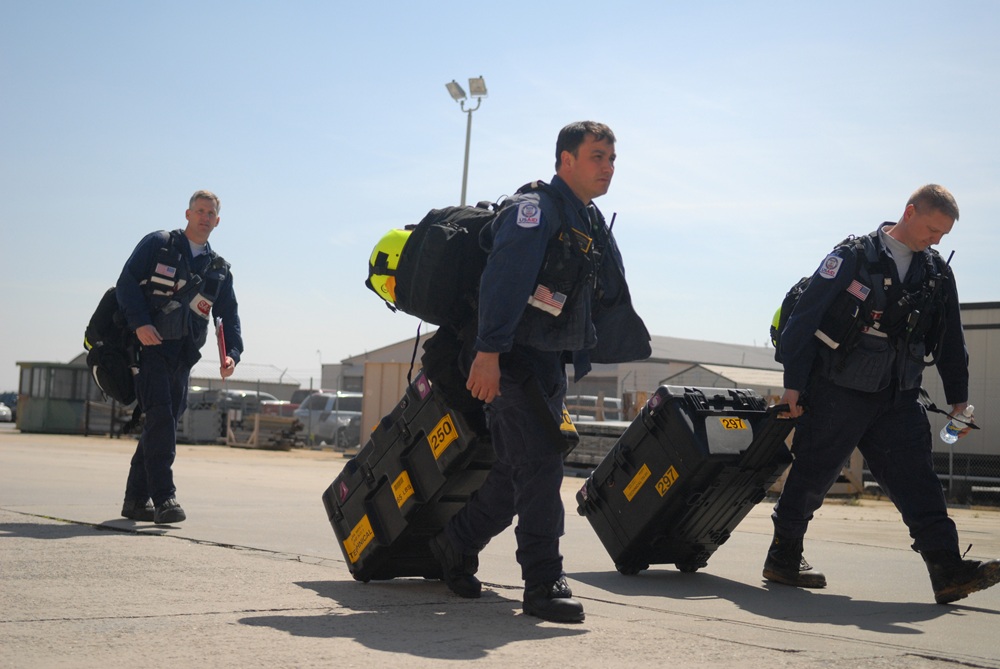
A FEMA Urban Search & Rescue (US&R) task force essentially brings its own portable communications infrastructure. They cannot assume that local radio systems, telephone networks, or the Internet will still be functioning.
Here’s what typically goes with a FEMA task force:
Radio Systems
Communications specialists deploy with dozens of portable and mobile radios, including:
- VHF and UHF portable radios
- 700/800 MHz radios where appropriate
- Portable repeaters
- Cross-band repeaters
- Vehicle-mounted mobile radios
- Aviation radios for helicopter operations
- Marine radios if operating near waterways
The equipment is programmed to communicate not only within the task force but also with local emergency agencies, military units, FEMA, and other responding organizations.
Satellite Communications
Because earthquakes often destroy cellular and Internet infrastructure, satellite systems are critical.
Teams typically deploy with:
- Satellite phones
- Portable satellite Internet terminals
- Broadband data terminals
- GPS equipment
- Satellite-based email capability
This allows them to maintain contact with FEMA headquarters, state emergency operations centers, and family members back home.
Portable Communications Center
Many task forces establish a communications trailer or mobile communications unit that functions as the nerve center for the deployment.
Inside you’ll typically find:
- Radio dispatch consoles
- Multiple radio networks
- Computer workstations
- Incident management software
- Large status boards and mapping displays
- Battery backup systems
- Portable generators
Think of it as a miniature emergency communications center that can be set up almost anywhere.
Data Networks
Modern US&R operations depend heavily on data.
Communications personnel build portable computer networks using:
- Wi-Fi access points
- Ethernet switches
- Portable servers
- Mesh networking equipment
- Ruggedized laptops and tablets
Search teams can exchange maps, structural assessments, victim locations, photographs, engineering reports, and medical information in near real time.
Specialized Search Equipment
Communications specialists also support technical search teams using equipment such as:
- Fiber-optic search cameras
- Pole-mounted video cameras
- Acoustic listening devices capable of detecting faint tapping or voices beneath rubble
- Thermal imaging cameras
- Unmanned aerial systems (drones) for aerial assessment
These devices often feed video or audio back to command personnel making rescue decisions.
Power Systems
None of this works without electricity.
Task forces carry:
- Portable generators
- Battery charging stations
- Fuel supplies
- UPS systems
- Portable lighting towers
- Solar charging equipment for some deployments
Who Runs It?
Each FEMA task force includes dedicated Communications Specialists (COML/COMT-qualified personnel in many cases). Their responsibilities include:
- Building the radio network
- Programming radios
- Managing frequencies
- Coordinating with local communications officials
- Maintaining satellite links
- Troubleshooting equipment
- Supporting interoperability between multiple responding agencies
For a large deployment, they may be supporting hundreds of users simultaneously.
While rescue dogs and firefighters often receive the headlines, none of these complex operations would be possible without reliable communications. Every search assignment, engineering evaluation, medical evacuation, helicopter landing, and logistics request depends on a communications system built by specialists who arrive with their own radios, satellite equipment, computer networks, generators, and dispatch capabilities. For scanner listeners and amateur radio operators, it’s a reminder that communications isn’t just supporting the rescue—it is one of the essential tools that makes the rescue possible.