A 93 year old water main broke near the campus of UCLA sending a torrent of raging water through parking structures and athletic facilities.
The 30-inch pipe’s rupture shot water 30-feet into the air sending an estimated 20 million gallons roaring onto roads and the campus.
Urban search and rescue crews from the LAFD searched the flooded parking garages for any possible victims. No injuries were reported from the flooding.
LADWP crews have completed shutting off water to the 30-inch trunkline that ruptured earlier this afternoon on Sunset Boulevard, near UCLA.
LADWP deployed their new incident command vehicle. This is the first time it has been used.
Preliminary information indicates that no customers are without water and water quality was not adversely impacted. Crews will begin work immediately to repair the 30-inch ruptured steel-riveted pipe that delivers water to the area at a high velocity from Upper Stone Canyon Reservoir.
Crews shut off three large diameter valves as quickly and safely as they could, taking care to avoid further damage due to pressure in adjacent pipes that could have lead to further ruptures if care was not taken.
Water flow through the pipe was estimated at 75,000 gallons per minute at the peak. LADWP serves approximately 500 million gallons of water to customers each day.
Members of the public are advised to avoid the area.
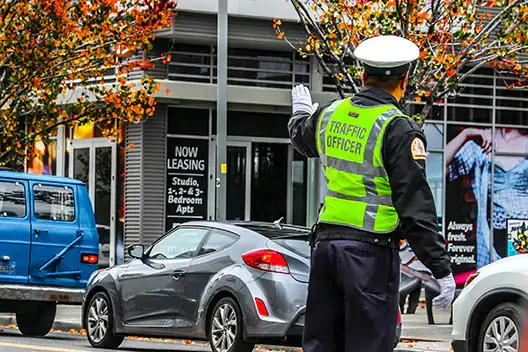
Recommended traffic detours are as follows: Westbound on Sunset should go south on Beverly Glen then west on Wilshire Boulevard then back north on Veteran/Sepulveda to get around the closure. Eastbound traffic should head south on Veteran/Sepulveda then east on Wilshire Boulevard, then head north on Beverly Glen. For access into UCLA Campus please use Westwood Boulevard.
I’ve been listening to a relatively new system a bit for the past several months: https://www.radioreference.com/apps/db/?sid=10819 This is the California Regional Interoperable System (CRIS). I suppose this is the approximate *statewide* equivalent of the many individual *regional* interoperability systems (such as LA RICS). As I recall, LA RICS will eventually morph into FirstNet. Perhaps CRIS…
A late-December copper wire theft at a major City of Los Angeles communications site exposed a vulnerability in municipal infrastructure, temporarily knocking a citywide radio system offline and forcing officials to curtail parking and traffic enforcement operations for safety reasons. The incident occurred at a prominent radio communications tower located in Elysian Park, just north…
A troubling incident involving unauthorized transmissions on public safety radio channels in Pittsburgh is drawing national attention within the radio monitoring community. Over several days in early March 2026, an unknown individual broadcast threatening and hateful messages over a public safety radio channel used by Pittsburgh police and emergency services. For scanner listeners and radio…
“It’s time for us to retire,” begins the announcement that Monitoring Times magazine will cease publication at year’s end after 33 years. “We will publish through the December 2013 issue,” publisher Bob Grove, W8JHD, told ARRL. “The decision wasn’t an easy one, but economics played a greater part than personal. Judy and I are in…
The men and women of the Los Angeles Fire Department cordially invite you to join Fire Chief Brian L. Cummings, civic and community leaders as well as members, friends and family of the LAFD, as our community gathers to respect those who made the ultimate sacrifice. 2011 Los Angeles Firefighters Memorial Ceremony Saturday, October 8, 2011…
On September 8th AOR released details regarding a new multi-mode digital communications receiver. The AR-DV1 is described as a standalone SDR reciever, which does not need to be hooked up to a computer to operate. This radio will decode the following digital emission modes: DMR (MotoTrbo), dPMR (European version of FRS/GMRS), D-Star (Icom’s Amateur Radio Digital…
 water through parking structures and athletic facilities.