
A late-December copper wire theft at a major City of Los Angeles communications site exposed a vulnerability in municipal infrastructure, temporarily knocking a citywide radio system offline and forcing officials to curtail parking and traffic enforcement operations for safety reasons.
The incident occurred at a prominent radio communications tower located in Elysian Park, just north of downtown Los Angeles and west of Dodger Stadium. The hilltop site – often referred to informally as Radio Hill – overlooks much of the Los Angeles Basin and hosts antennas and equipment that support multiple city departments.
According to city officials, suspected copper wire thieves damaged equipment at the site, disabling the Los Angeles City Services Trunked Radio System (STRS), which is used by LADOT parking and traffic enforcement officers for daily operations and emergency communications.
Two suspects were arrested at the location.
What is the LA City STRS?
The City of Los Angeles Services Trunked Radio System, commonly known as STRS, is a shared, city-owned radio network designed to provide reliable communications for non-police and non-fire departments. It supports agencies such as:
- Los Angeles Department of Transportation (LADOT)
- Parking Enforcement
- General Services
- Public Works–related departments
- Other municipal services requiring wide-area radio coverage
Unlike traditional single-channel radios, STRS is a trunked radio system, meaning users automatically share a pool of radio frequencies managed by a central controller. This allows thousands of city employees to communicate efficiently across Los Angeles without each department needing its own dedicated frequencies.
While STRS does not carry LAPD or LAFD primary dispatch traffic, it remains a mission-critical system for city workers who operate alone in the field and rely on radios for coordination and emergency assistance.
Impact on City Operations
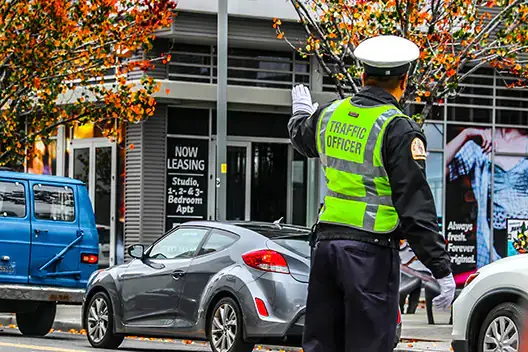
As a result of the damage, LADOT radios and emergency “duress” buttons became unusable, prompting the department to temporarily withdraw parking and traffic enforcement officers from certain duties, including service calls and special event staffing.
City officials emphasized the decision was made strictly for employee safety. Without a functioning radio system, officers would not have had a reliable way to request help in the event of a confrontation or medical emergency.
Limited personnel remained on duty while technicians worked to restore communications and test system reliability. Full radio service was restored several days later, and normal operations resumed.
Importantly, LAPD and LAFD radio systems were not affected by the incident, as they operate on separate communications networks.
Why the Elysian Park Site Matters
The Elysian Park radio site is one of the city’s most strategically important communications locations. Positioned on elevated terrain just northwest of downtown, the tower provides wide-area radio coverage to central Los Angeles, including dense urban neighborhoods and major transportation corridors.
Facilities like this typically house:
- Radio repeaters and trunking controllers
- Power distribution and backup battery systems
- Grounding and lightning protection infrastructure
- Fiber and copper connections linking the site to city networks
Copper thieves often target grounding wires, power cables, or interconnecting lines, which can disable an entire system even if the radios and antennas themselves remain intact.
A Growing Infrastructure Threat
Copper theft has become an increasingly serious issue across Los Angeles, affecting street lighting, utilities, rail infrastructure, and now communications systems. Rising metal prices and the relative ease of stripping exposed wiring have made hilltop and utility sites attractive targets.
City leaders and law enforcement officials have warned that such crimes go far beyond property damage. When communications systems are disrupted, the consequences can ripple outward—affecting worker safety, public services, and emergency response readiness.
Los Angeles has expanded enforcement efforts in recent years, including specialized task forces and tougher penalties aimed at reducing metal theft and cracking down on illegal resale.
A Broader Reminder
While this incident primarily impacted parking enforcement, it serves as a broader reminder that modern cities depend on centralized communications infrastructure, much of it hidden in plain sight on hillsides and rooftops.
When that infrastructure is compromised—whether intentionally or accidentally—the effects can quickly extend well beyond the immediate target.
For a city as large and complex as Los Angeles, even a seemingly small act like cutting copper wire can temporarily silence an entire system—and force city services to hit pause until the radios come back online.