
New Airspace Rules Impact Police, Media, and Emergency Aircraft
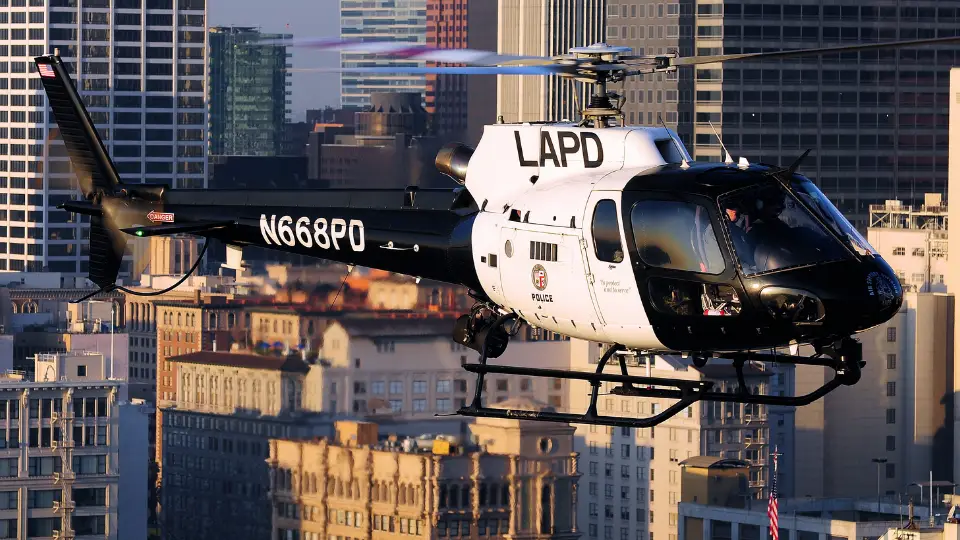
The Federal Aviation Administration (FAA) has enacted new airspace restrictions affecting helicopter operations around Los Angeles International Airport (LAX), creating significant changes for aviation operators and public-safety agencies across the Los Angeles area.
The move has effectively limited or prohibited many helicopter flights inside portions of the LAX Class B airspace, a development that has already affected law enforcement, news media aircraft, and emergency aviation services.
For Southern California radio monitoring enthusiasts, the changes may also alter the types of aviation and public-safety radio traffic heard on scanners.
What Changed?
According to aviation officials and helicopter operators, the FAA has begun denying many requests to allow helicopters to enter or transit LAX airspace, effectively creating a large operational restriction zone around the airport.
The policy applies primarily to helicopters operating under Visual Flight Rules (VFR). These flights rely on pilots visually separating themselves from other aircraft rather than using full instrument flight procedures.
While the FAA has not described the action as a permanent ban, controllers are currently much more likely to deny helicopter entry into the LAX airspace due to traffic complexity and safety concerns.
This effectively creates a de facto restriction for many routine helicopter operations.
Why the FAA Is Doing This
The FAA says the restrictions are part of a nationwide safety review of airports where helicopter traffic mixes with heavy airline operations.
Large metropolitan airports like LAX have extremely complex airspace structures. In Southern California, helicopters from multiple sectors regularly operate in the same airspace:
- Law enforcement air support units
- Television news helicopters
- Air ambulance flights
- Corporate helicopters
- Sightseeing flights
- Training aircraft
All of these aircraft must operate around the intense arrival and departure traffic at one of the busiest airports in the United States. The review follows growing national scrutiny over helicopter routing and separation standards near major airports.
Impact on Public Safety Aviation
One of the most notable effects of the restriction is its impact on police helicopter coverage in Los Angeles.
Internal LAPD communications indicated that air support units would not be able to respond to calls in certain areas near LAX due to the new airspace limitations.
Reports indicate that the affected region includes parts of several LAPD patrol divisions:
- Newton Division
- 77th Street Division
- Southeast Division
- Portions of Pacific Division
These neighborhoods sit within the broader LAX Class B airspace footprint. Fire department helicopters, medical transport flights, and media aircraft may also face operational limitations while the FAA continues its safety review.
What Scanner Listeners May Notice
For aviation and scanner hobbyists in Southern California, the change could produce several interesting monitoring effects.
1. Reduced helicopter traffic on LAX tower frequencies
If helicopters avoid the restricted airspace entirely, fewer helicopter check-ins may be heard on LAX Tower and LAX Helicopter frequencies.
2. Increased routing around LAX
Helicopters may choose to route around the restricted airspace rather than request clearance through it. This could increase traffic over Santa Monica and Hawthorne airports.
3. More coordination on public safety channels
Law enforcement and fire departments may rely more on ground resources when air units cannot respond.
Listeners may hear references to:
- “Airship unavailable due to LAX airspace”
- Ground units substituting for aerial support
What Happens Next
The FAA has not announced a timeline for lifting the restrictions. Officials say the changes are temporary while they evaluate safety risks and operational complexity around the airport.
Depending on the results of the review, several outcomes are possible:
- Permanent helicopter routing changes around LAX
- New altitude or corridor requirements
- Limited helicopter access during peak airline traffic periods
For now, the situation remains “until further notice.”