
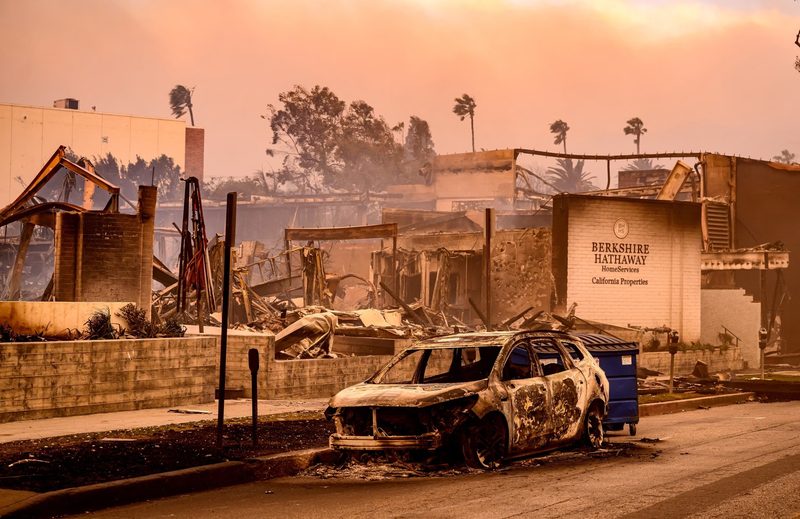
One year has passed since the catastrophic Southern California wildfires that devastated Pacific Palisades and Altadena, forever changing neighborhoods and leaving a lasting mark on Los Angeles County. While headlines have faded, recovery continues—and for the radio monitoring community, the fires remain a textbook example of how communications, interoperability, and monitoring play a critical role during large-scale disasters.
Recovery: Slow Progress, Long Road Ahead
Rebuilding in both communities remains uneven. While debris removal and environmental remediation are largely complete, actual home reconstruction has progressed slowly due to insurance disputes, rising construction costs, and permitting challenges. Many lots remain empty, and displaced residents continue to navigate temporary housing or relocation. County and city officials report thousands of permits issued, but only a small fraction of homes are fully rebuilt as of the one-year mark.
Altadena, in particular, has faced additional challenges related to environmental testing and concerns over lingering contamination in fire-damaged structures. Community groups continue to push for transparency and long-term health monitoring as rebuilding gradually moves forward.
The Firefighting Response: Communications Overload
From a radio monitoring perspective, the Palisades and Eaton Fires were among the most communications-intensive wildfire events ever seen in Los Angeles County.
Agencies involved included:
- Los Angeles Fire Department (LAFD) — operating on its conventional analog channels
- Los Angeles County Fire Department (LACoFD) — primary and tactical channels, plus command nets
- CAL FIRE — local units and statewide mutual-aid resources
- U.S. Forest Service — federal command and air-to-ground coordination
- Mutual-aid strike teams from across California and neighboring states
For scanner listeners, this meant listening to dozens of active channels simultaneously, including:
- Command and tactical fireground channels
- Air-to-air and air-to-ground frequencies coordinating helicopters and fixed-wing tankers
- Interoperability channels linking city, county, state, and federal agencies
- Law enforcement evacuation and traffic control channels
- Emergency management coordination nets
Air Ops: A Scanner Listener’s Front-Row Seat
Aviation communications were especially active and compelling to monitor. Heavy helicopter traffic, rapid bucket cycles, and constant air-attack coordination made air-to-ground channels some of the most informative during peak fire activity. For many listeners, these frequencies provided the clearest real-time picture of fire behavior, resource allocation, and tactical decision-making—often ahead of official public updates.
System Load, Redundancy, and Reality
The fires also highlighted the importance of system resilience and redundancy. With radio traffic pushed to extreme levels, agencies relied heavily on disciplined radio procedures, pre-assigned tactical plans, and mutual-aid interoperability. Scanner listeners could clearly hear the difference between well-managed command nets and overwhelmed tactical channels as the incident evolved.
Amateur radio volunteers and auxiliary communications groups were also quietly active, supporting shelters, logistics, and backup communications when commercial systems became strained.
Lessons for the Monitoring Community
One year later, these fires continue to offer important lessons for scanner enthusiasts:
- Keep fire, air ops, and interoperability channels programmed year-round
- Understand which agencies use conventional channels vs. trunked systems
- Expect rapid frequency changes and evolving incident command structures
- Monitor aviation bands during wind-driven events for critical situational awareness
Looking Ahead
Southern California’s wildfire threat is no longer seasonal—it’s constant. As agencies adapt with improved coordination, hardened infrastructure, and new mitigation strategies, the radio spectrum will remain a vital window into how major incidents unfold.
For the monitoring community, the Palisades and Altadena fires reinforced an essential truth: when everything else fails or lags, the radios keep talking.
And one year later, those transmissions still tell the story of what happened—and what lies ahead.
Photo: ABC News